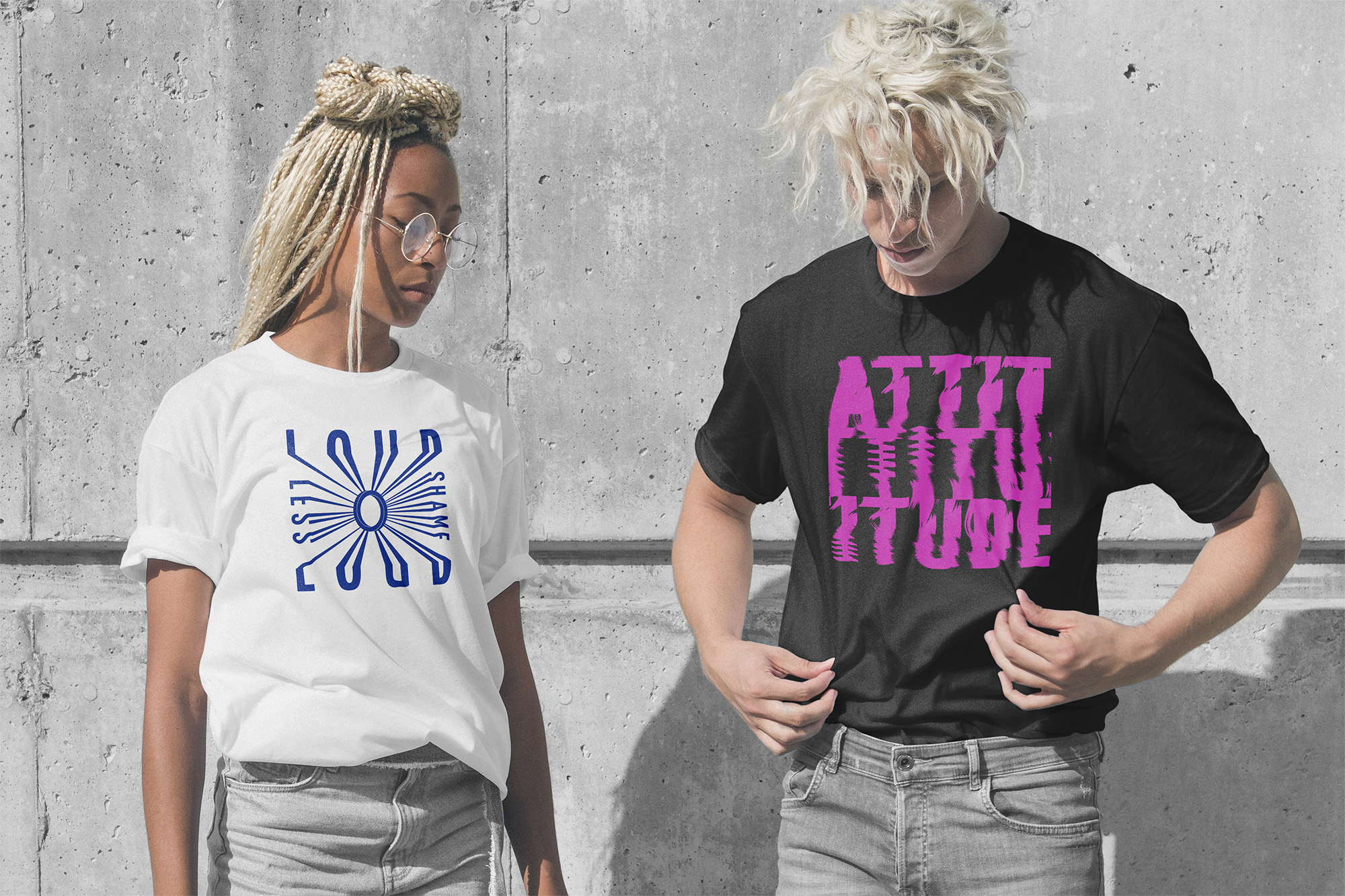
There is a moment at every festival when someone walks past you in a shirt and you immediately know which band they love — without reading the name. The typography, the graphic, the color. Sometimes just the vibe of it. That is not an accident. That is brand work.
Band merch is often treated as a revenue line. An afterthought bolted onto the end of a release or tour cycle. Print a hundred shirts with the logo on it, sell them at the merch table, done. But that framing misses what merch actually is: a wearable, usable, giftable extension of your brand, one that travels with your audience long after the show is over.
For independent artists especially, this matters twice. Once as a brand opportunity. Once as an income stream that does not depend on streams, algorithms, or label advances. Let’s talk about both.
BAND Merch as income
Independent artists have relatively few direct revenue channels. Live income, sync licensing, digital royalties, and direct-to-fan sales are the main ones. Merch sits squarely in that last category, and it is the one with the highest potential for margin — if you get the product right.
The economics are simple: a well-designed, limited-run item at the right price point outperforms a generic shirt at a lower price point, both in units sold and in perceived value. People will pay more for something that feels considered. They will also buy more — and return to buy again — if the item genuinely reflects the artist’s world.
This is where strategy and revenue align. Getting the merch right is not just good branding. It is good business.
On-brand vs. off-brand merch — and why the gap is costly
Brand consistency is not about aesthetics for their own sake. It is about trust. When your visual identity, your music, your social presence, and your merch all feel like they come from the same place, your audience experiences you as coherent and trustworthy. When they don’t, audiences sense something is off, even if they can’t name it.
Consider sustainability as one example of where this gap becomes visible. An artist who positions themselves around environmental values (in their lyrics, their touring choices, their communication) and then produces cheap, unethical merch is not just making a tactical error. They are actively contradicting their own positioning. The clash between the value and the product is a brand message in itself, and not the one they intended.
Material choices, print finishes, packaging — all of these carry meaning. Organic cotton communicates something different than polyester. A risograph-printed zine communicates something different than a mass-produced poster. These are not details. They are the brand, made physical. If you want to know more about how print finishes carry meaning, check out my article 7 Print Finishing Techniques To Elevate Your Brand.
Audience analysis: the step most artists skip
Before any design decisions, before any supplier conversations, there is one question that should shape everything: what would your audience actually buy?
Not what you think looks cool. Not what the genre traditionally produces. What does this specific audience want to own?
This requires the same audience thinking that should inform your music, your visuals, and your communication strategy. Who are they? What do they value? What is their aesthetic vocabulary? Do they dress in a way that makes a well-designed garment something they would actually wear — or are they more likely to display something, collect it, use it?
A festival crowd skewing fashion-conscious will respond differently to the same merch item than a crowd who came for the music and the community. A niche electronic artist with a dedicated collector audience can support limited-run, higher-priced items. A band building a broad base might need lower price points and high volume.
Getting this wrong is expensive — literally, in terms of stock that does not sell — and strategically, in terms of brand perception. Getting it right is one of the clearest ways to demonstrate that you understand your audience.
The item itself is a positioning decision
The standard merch menu — t-shirt, hoodie, tote bag — exists because it is reliable and scalable. There is nothing wrong with it, and for many artists it is exactly right. But the most memorable merch is the item that only this artist could have made.
When Peaches released Rub in 2015, the accompanying merch included an aphrodisiac-infused massage oil. When Lady Gaga promoted “Rain on Me” with Ariana Grande, she sold branded rain boots. Slipknot have their own whiskey. These are not gimmicks. They are extensions of a concept — the product is continuous with the creative work, not separate from it. The merch table becomes part of the album.
Most artists do not need to go that far. But the question is worth asking: what item, beyond a shirt, would feel completely you? What would your audience display, use, keep?
The answer almost always comes from audience knowledge, not from a merch supplier’s catalog.
DESIGN: A logo on a shirt VS. actual merch
There is a spectrum of merch design approaches, and many artists default to one end of it without thinking about whether it is right for them.
The simplest approach is the band logo or artist name on a garment. Clean, clear, functional. Works well when the logo itself is strong, distinctive, and carries meaning — when it functions as a symbol rather than just a label.
The more complex end of the spectrum treats the garment or object as a design canvas. Typographic merch with a message, artwork that references the album or a specific track, a visual concept that exists only on the merch and nowhere else. This approach takes more time and intentionality, but it produces items people actually want to wear — pieces that work as clothing in their own right, and that make strangers ask where you got that.
The right answer depends on where your brand is. An emerging artist might prioritize recognition over concept. An established artist can take more creative risk. Either way, the design still needs to be worth wearing. A logo on a shirt works when the logo is strong enough to carry it. If it isn’t, no amount of visibility strategy will move stock.
Both approaches require the same thing: a visual identity strong enough to anchor the merch. Without that foundation, no design decision can fully compensate.
The case for collaboration
If your audience is fashion-literate — if aesthetics and design are part of the culture around your music — then a collaboration with a local designer or small brand is not just a nice idea. It is the correct positioning move and can result in original, custom designs that go beyond the standard t-shirt or tote bag.
A solo project with a Berlin-based graphic designer who understands the scene produces something that the scene will recognize as credible. It signals taste, community awareness, and an investment in craft. It also gives both parties something to promote: merch collaborations are inherently newsworthy in a way that a standard press run is not.
The terms matter. Be clear on exclusivity, rights, production quantities, and revenue split before you begin. And choose collaborators whose brand values align with yours and whose audience overlaps with yours. The whole point is the combined reach, not just the aesthetic upgrade.
PRODUCTION COSTS AND WHERE TO START
Production Costs and Where to Start
Budget shapes every merch decision, and it is worth being honest about that upfront. The good news is that the barrier to entry has never been lower. Print-on-demand services let you sell without holding any stock. No minimum orders, no upfront investment, no boxes of unsold t-shirts in your living room. You upload a design, set a price, and the supplier handles printing and shipping. For artists testing the water or releasing something tied to a specific moment, it is a sensible place to start.
The tradeoff is margin and quality. Print-on-demand items rarely match the weight, finish, or feel of a properly produced run — and at the premium end of the market, that difference is noticeable. When your audience is ready to pay for something special, the product needs to deliver on that promise.
A limited run with a local or specialist printer opens up better materials, custom labels, tactile finishes like screen printing or embroidery, and the kind of detail that makes an item feel intentional. It requires more upfront investment, but it also commands a higher price point and does more for the brand. The two approaches are not mutually exclusive. Use print-on-demand to stay present between releases, and invest in a proper run when the moment deserves it.
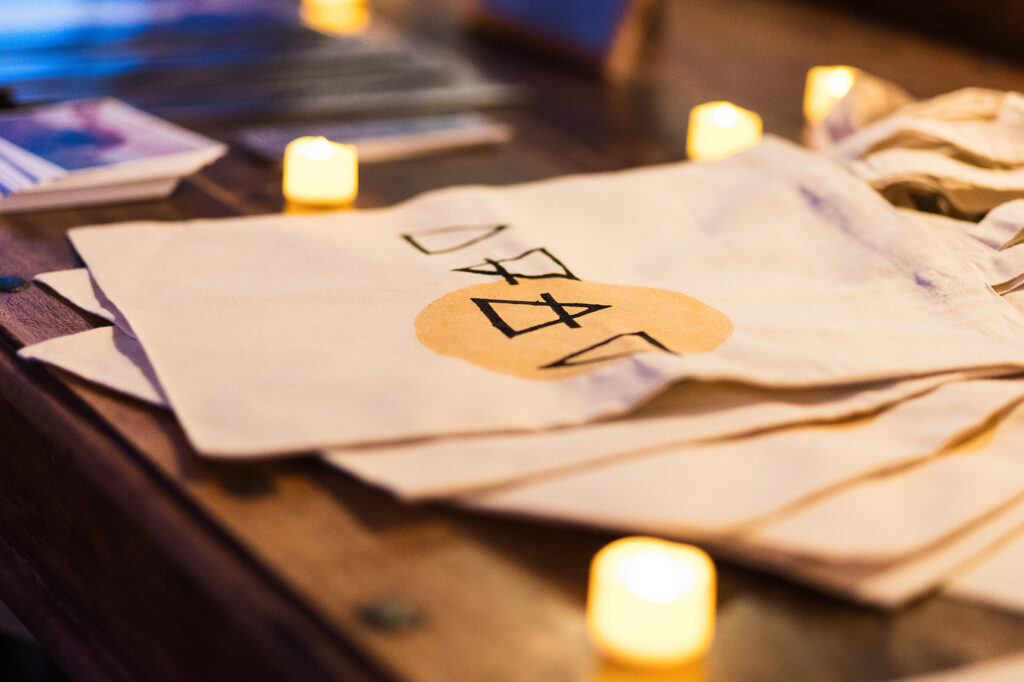
And sometimes the most memorable merch requires neither a supplier nor a budget — just an idea and the willingness to make it yourself. For her album release Golden Sign, artist Meravi hand-sewed a limited edition of hair bands from golden fabric and sold out at the release show. No print run, no platform, no overhead. Just a product that was completely on-concept and impossible to replicate. That kind of merch does not scale — but it does not need to. It creates exactly the right impression at exactly the right moment, and that is often worth more than a hundred units of something generic.
A few questions to take into the next release cycle
Before you commission anything, sit with these:
Does this item feel like it comes from the same world as the music?
Would my audience display this, use this, keep this — or would they file it in a drawer?
Does the material and finish reflect my brand values? Am I producing this because it is right, or because it is easy?
Is there a collaborator who could make this more interesting and expand its reach?
Merch done well is one of the most tangible things an artist can offer. It is a physical object that carries the brand into the world — into living rooms, festivals, daily life. That is not a small thing. Treat it accordingly.
Stuck in the weeds of your brand?
You pour so much love into the details of your brand—the colors, the photos, the messaging. It’s frustrating when that hard work feels like it gets lost in the scroll.
Let’s shift the focus from the endless tweaking to the bigger, more exciting picture: building a brand that truly connects and captivates your audience.
My online courses provide a supportive framework to help you build a consistent and standout brand that truly grabs attention, so you can get back to what you love most—making music.